
Monetary Policy Transmission Through Online Banks
Milton Friedman argued that monetary policy lags are “long and variable.” In other words, when the Federal Reserve changes interest rates, there is often a delay before banks follow suit, as well as variation in degree to which they do. This paper studies whether online banking impacts the transmission of national monetary policy, asking whether online banks’ deposit rates respond differently than traditional brick-and-mortar banks.
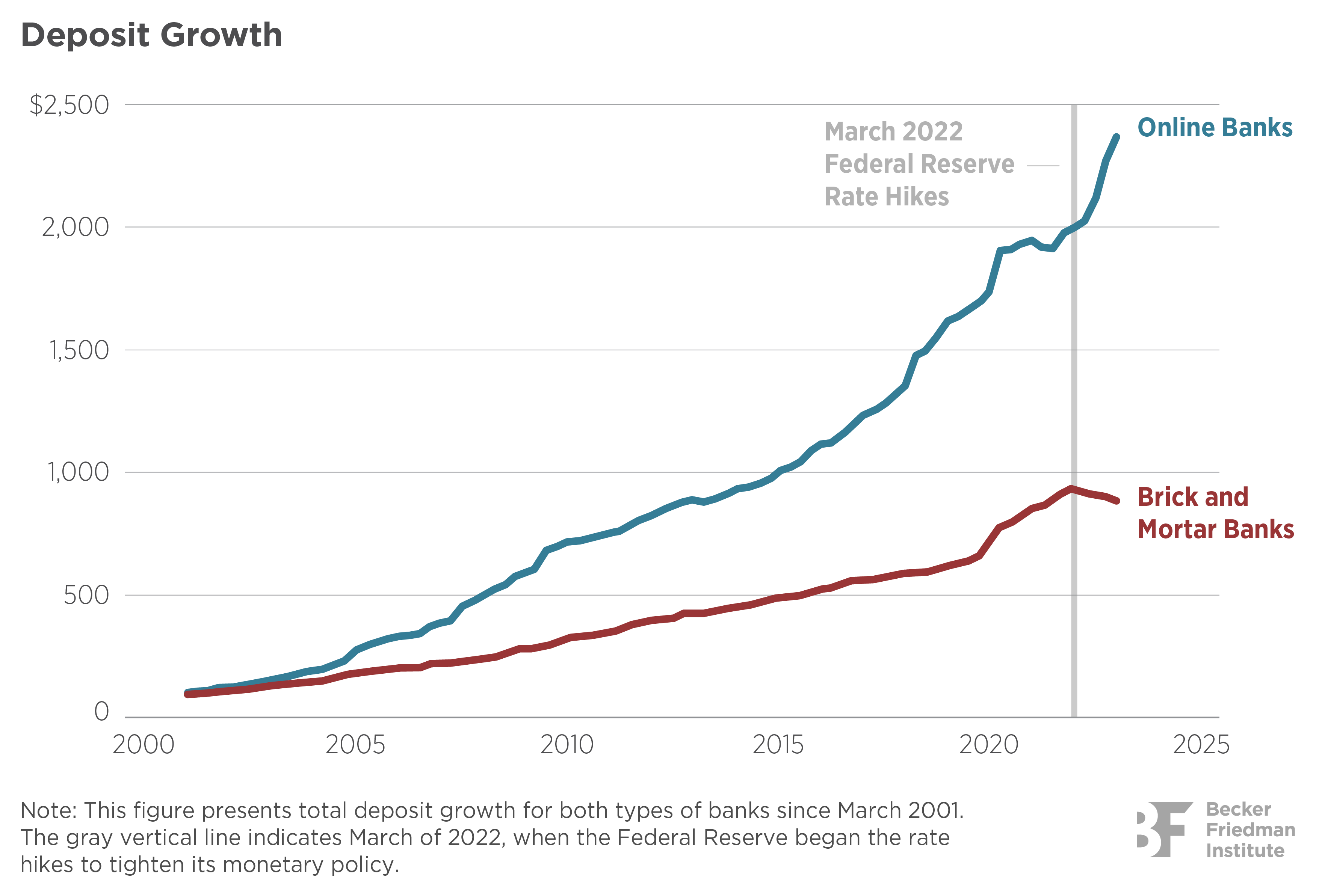
The authors study changes in the Federal Funds Rate (FFR) in the United States, specifically the rapid increase from 0% in March 2022 to 5% in April 2023. They also analyze data on online and brick-and-mortar banks’ assets, deposits, and interest rates and find the following:
- Monetary policy transmission is significantly larger for online banks. A 100 basis points increase in the FFR leads to a roughly 30 basis points larger increase in deposit rates of online banks compared to brick-and-mortar lenders.
- Over the last decade, deposits at online banks grew at a much faster rate than that of traditional banks. This growth continues after rate hikes for online banks, while traditional banks experience net deposit outflows.
- The authors attribute the relatively high-rate sensitivity of online banks to their use of financial technology (FinTech), and not to better investment opportunities or to younger and richer depositors.
These findings shed new light on the role of online banks in interest rate pass-through. The authors note that much important work remains to explore how financial technology will shape policy in the future. The growing utilization of online banks and financial technology will likely change the efficacy of central bank policy in the future, and old policy rules and forward guidance may have different effects on lending, growth, and employment than policymakers’ expectations.

